
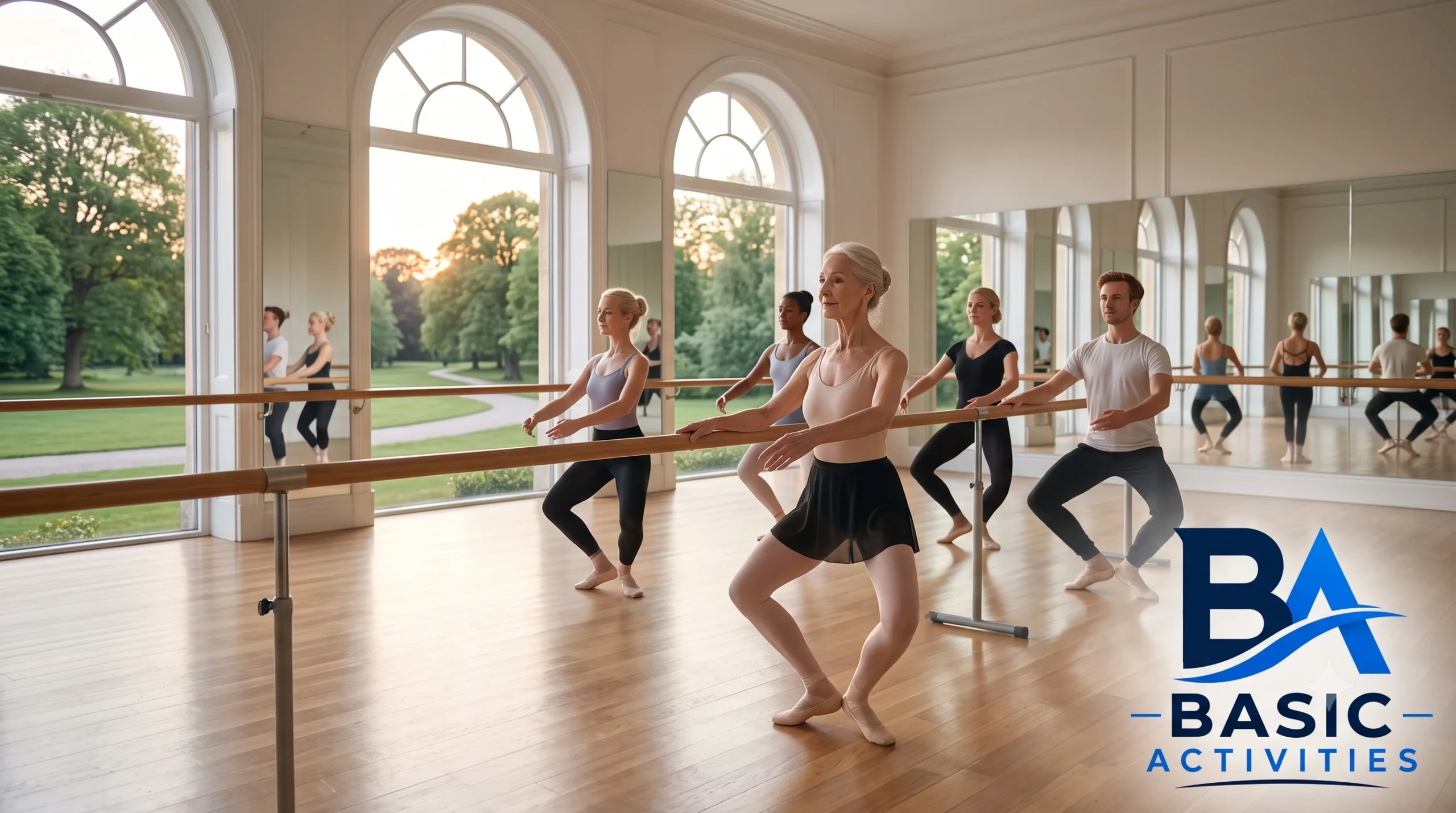
Stepping into a dance studio for the first time as an adult can feel deeply intimidating. You might picture sleek, flexible dancers who have been training since early childhood, moving effortlessly through intricate combinations. It is completely normal to feel a sudden wave of self-consciousness when you consider starting ballet later in life. However, one fundamental truth transforms everything: ballet is not reserved solely for elite prodigies. Today, thousands of adults worldwide are discovering the joy, physical strength, and mental clarity that come from taking up classical dance as complete beginners.
Learning ballet basics for adults no experience is one of the most rewarding physical and artistic endeavors you can undertake. Classical dance offers a full-body workout that builds deep core strength, improves postural alignment, enhances joint mobility, and sharpens cognitive function. Unlike standard gym routines that often feel mechanical or repetitive, ballet merges intense physical conditioning with artistic expression and musicality. You do not need natural flexibility, a specific body shape, or prior background in sports or dance to begin. All that is required is a willing attitude, an open mind, and a willingness to embrace the learning process at your own unique pace.
Overcoming the Mindset Gap: Why It Is Never Too Late to Start Ballet
The single largest hurdle for most adult beginners is psychological rather than physical. The persistent cultural narrative surrounding ballet suggests that if you did not start as a child, the window of opportunity has permanently closed. This myth stems from the demanding physical timeline required for professional stage careers, which do indeed require years of intensive youth training. But taking up ballet as an adult is an entirely different journey with entirely different goals. Adult ballet is designed for fitness, personal enrichment, artistic exploration, and injury prevention.
As an adult student, you bring distinct cognitive advantages to the studio that children simply do not possess. Adults have superior spatial awareness, a developed understanding of body mechanics, and the capacity to process detailed analytical corrections from an instructor. When a teacher explains how to engage your deep core, stabilize your pelvis, or extend through the back of your knees, your mature mind can quickly map those anatomical concepts to physical action.
It is vital to abandon any instinct to compare yourself to others in the room. Everyone enters an adult beginner class with a completely unique baseline. Some classmates may bring backgrounds in yoga or gymnastics, while others may not have exercised regularly in years. Success in adult ballet is measured solely by personal progress—how much more grounded, aligned, and expressive you feel today compared to when you first walked through the studio door.
Essential Ballet Terminology: Decoding the Universal French Language
When you attend your first class, it may initially sound as though the instructor is speaking a secret language. That is because classical ballet uses French terminology universally across the globe. Whether you drop into a studio in Paris, Tokyo, or your hometown, the names of the movements remain identical. Familiarizing yourself with a few fundamental terms beforehand will immediately build your confidence and help you follow along during combinations.
- Plié (to bend): Bending the knees while maintaining an upright torso and turned-out hips. It acts as the foundational cushion for nearly all ballet movements, including jumps and transitions.
- Tendu (to stretch): Extending one leg smoothly along the floor until the foot reaches a full point with the toes maintaining light contact with the floor.
- Dégagé (to disengage): Similar to a tendu, but the working leg brush-strokes off the floor, lifting a few inches into the air with crisp precision.
- Relevé (to rise): Smoothly lifting your heels off the floor to balance on the balls of your feet.
- Port de Bras (carriage of the arms): The controlled, graceful movement and positioning of the arms through specific geometric pathways.
- Chassé (to chase): A sliding step where one foot appears to chase and overtake the other along the floor.
Anatomy Note: You do not need to memorize the entire French dance dictionary before your first class. Ballet teachers routinely demonstrate movements as they call out the French terms, reinforcing the vocabulary naturally through visual and auditory repetition over time.
Mastering the Basic Foot and Arm Positions
Every complex piece of choreography in classical ballet originates from five fundamental positions of the feet and corresponding placements of the arms. Understanding these positions provides the structural blueprint for your entire body alignment.
The Fundamental Foot Positions
- First Position: Heels touch together while the legs turn outward from the hip sockets. Your feet form a neat “V” shape on the floor.
- Second Position: The feet maintain the same outward rotation as First Position, but are spaced apart horizontally at roughly shoulder-width distance.
- Third Position: One foot glides in front of the other so that the heel of the front foot rests directly against the instep or arch of the back foot. This serves as an accessible stepping stone to Fifth Position for adult beginners.
- Fourth Position: One foot is placed directly in front of the other, separated forward by roughly the length of one foot, maintaining outward leg rotation.
- Fifth Position: The front foot crosses fully over the back foot so that the front heel meets the big toe joint of the rear foot. Note: Beginners should allow this position to remain gentle rather than forcing tight crossovers.
The Complementary Arm Positions
The arms (port de bras) work in direct harmony with the feet to maintain balance and upper-body posture. In En Bas (low position), the arms form a gentle rounded oval in front of your hips, as if holding a large basket. In First Position, that same rounded oval is lifted directly in front of the solar plexus. In Second Position, the arms open wide to the sides with soft, rounded elbows and long wrist lines, staying slightly in front of your peripheral vision to prevent shoulder strain.
Proper Body Alignment and the Science of Turnout
Ballet posture differs significantly from everyday standing posture. Proper alignment is the single most important safety mechanism in dance; it protects your joints, prevents lower back pain, and allows you to move with maximum efficiency.
Stacking the Skeleton
To achieve classical posture, imagine a plumb line dropping straight down from the crown of your head through your spine to the floor. Your head sits lightly over your shoulders, your shoulders rest directly above your hips, and your hips stack cleanly over your ankles. You want to engage your deep lower abdominal muscles—often described as pulling your navel toward your spine—to support your lower back and keep your pelvis neutral rather than tilted forward or backward.
Understanding Turnout
“Turnout” refers to the outward rotation of the legs, which gives ballet its iconic aesthetic. The most crucial concept for adult beginners to grasp is that turnout must originate entirely from the deep rotator muscles of the hip sockets, never from the knees or ankles.
| Correct Turnout Practice | Dangerous Turnout Practice |
| Rotation starts deep inside the hip joint. | Forcing feet open wide while knees point inward. |
| Knees bend directly over the center of the toes. | Knees cave inward during a bend (plié). |
| Weight is distributed across the heel and ball of the foot. | Arches collapse inward (pronation) to force wide angles. |
| Progresses naturally as hip flexibility improves. | Forcing a 180-degree angle on day one. |
If you attempt to create the illusion of a wide turnout by wrenching your feet outward while your hips remain tight, you place immense twisting stress on your knee ligaments and foot arches. Always prioritize safety over dramatic angles. Work with the natural range of motion your hips provide today; over time, consistent practice will gradually increase your hip rotation mobility.
Anatomy of an Adult Beginner Ballet Class
Understanding how a typical ballet class is structured eliminates pre-class anxiety and helps you pace your energy throughout the session. A standard 60-to-90-minute beginner class always follows a methodical, three-part progression.
1. Barre Work (The Foundation)
Class always begins at the barre—a sturdy horizontal wooden or metal rail mounted along the studio walls. The barre provides light balance support while you focus on technique, alignment, and isolated muscle activation. You start with gentle warm-ups like pliés and tendus, progressively moving to faster, larger movements as your body heats up. Barre exercises build the foundational muscle memory and leg strength required to dance without support.
2. Center Work (Testing Your Balance)
Once the body is warm and aligned, dancers move away from the barre to the middle of the floor. Center work tests the balance and stability you developed during barre exercises. It usually begins with slow, sustained movements focused on balance (adagio), transitions into simple weight shifts and traveling steps across the floor (chassés and balancés), and culminates in light, low-impact jumps (petit allegro) or turn preparations.
3. Révérence (Cool Down & Respect)
Class concludes with a short, traditional cool-down sequence called the révérence. Dancers perform a formal bow or curtsy to the instructor and the accompanist or music. This elegant ritual serves as a moment of gratitude, acknowledging the hard work of your fellow classmates, your teacher’s guidance, and the centuries-old tradition of the art form.
Attire and Gear: What to Wear for Your First Class
One of the most common questions from adult beginners revolves around dancewear. The idea of wearing tight pink tights and a leotard can feel intimidating, but the good news is that most adult beginner classes have relaxed dress codes.
- Clothing: You do not need professional dancewear right away. Choose form-fitting, breathable athletic wear such as yoga pants, stretch leggings, or fitted tank tops and t-shirts. Form-fitting clothes are crucial because they allow your instructor to clearly see your knee alignment, pelvic tilt, and spinal posture to provide safe corrections. Avoid loose, baggy sweatpants or oversized sweaters that hide your body’s lines.
- Footwear: While socks can work for an absolute first trial lesson on wood floors, flat canvas or leather ballet slippers are highly recommended from the start. Canvas slippers with split soles offer flexibility and allow you to feel the floor properly, while leather slippers provide slight resistance that helps build foot strength. Pointe shoes (dancing on the tips of the toes) are strictly for advanced dancers with years of technical preparation and should never be used by beginners.
- Hair: Long hair should be pulled back neatly off your face and neck, ideally in a bun or secure ponytail. This keeps hair from whipping across your eyes during movement and allows your teacher to monitor your neck and shoulder alignment.
Health, Fitness, and Mental Benefits of Adult Ballet
Taking up ballet as an adult yields remarkable physical and psychological rewards that extend far beyond the dance studio walls.
Whole-Body Strength and Conditioning
Ballet builds long, lean muscle endurance without requiring heavy weightlifting equipment. The continuous engagement of the deep core, glutes, inner thighs, and calf muscles develops incredible balance and functional strength. Because movements emphasize lengthening muscles while contracting them (eccentric control), ballet helps create a balanced, resilient body.
Improved Joint Health and Posture
Modern sedentary lifestyles often lead to tight hip flexors, rounded shoulders, and weak postural muscles. Ballet actively counteracts these imbalances. By training your body to stand tall, open the chest, and lengthen the spine, your daily posture improves drastically. The controlled bending and stretching movements also promote joint lubrication and improved flexibility throughout the hips, ankles, and spine.
Cognitive Function and Mental Clarity
Learning ballet combinations requires intense mental focus, working memory, and spatial coordination. Matching intricate footwork to musical counts acts as a powerful cognitive exercise that builds new neural pathways. Moreover, the focused environment of a studio forces you to remain completely present in the moment, offering a meditative escape from daily life stress.
Studio Etiquette: Essential Guidelines for Beginners
Ballet studios carry a rich tradition of respect, focus, and community etiquette. Following a few simple studio rules ensures a harmonious experience for both you and your fellow dancers.
- Punctuality Matters: Plan to arrive 10 to 15 minutes before class starts. This gives you time to change shoes, stretch lightly, and settle into the space. Arriving late disrupts the quiet focus of the studio and skips the critical barre warm-up that prevents injury.
- Barre Spacing: Give your neighbors plenty of room. When standing at the barre, ensure you can extend your leg fully in front of and behind you without reaching into someone else’s personal space.
- Respect the Equipment: The barre is designed for light balance support, not for leaning on, hanging off, or resting your heavy weight.
- Mindful Quiet: Save casual conversations for before or after class. During class, keep your attention fully focused on the instructor’s physical demonstrations and verbal explanations.
- Embrace Corrections: In ballet, when an instructor offers you a correction, it is a sign of attentiveness and respect. Thank your teacher for corrections, as personalized feedback is the fastest vehicle for physical growth.
Frequently Asked Questions (FAQs)
Am I too old or too inflexible to start adult ballet?
No, you are neither too old nor too inflexible. Adult beginner classes are specifically designed for individuals starting from square one, regardless of age or current physical capability. Flexibility is an outcome of regular practice, not a prerequisite.
How often should an adult beginner take class?
Attending class 1 to 2 times per week is ideal for building consistent muscle memory and steady physical improvement. Practicing basic floor stretches or barre exercises at home for 15 minutes between studio classes will accelerate your progress even further.
Do adult beginners ever dance on pointe?
Pointe work requires years of consistent, specialized technical training to build the necessary foot, ankle, leg, and core strength to safely support body weight on the tips of the toes. Beginners should focus on flat slippers. While some adults do eventually progress to pointe after years of dedicated practice under expert supervision, it should never be rushed.
What if I cannot remember the combinations or choreography?
Forgetting combinations is completely normal for beginners! Processing visual steps, translating them into physical movement, and keeping time with classical music is a complex cognitive skill that takes time to develop. Instructors expect beginners to fumble initially, so simply follow the dancers in front of you and maintain a cheerful attitude.
Will adult ballet help me lose weight or gain strength?
Ballet provides an exceptional full-body conditioning workout that burns calories, builds lean muscle mass, boosts metabolism, and improves posture. When paired with a balanced nutrition plan, consistent ballet practice significantly aids weight management and muscle definition.
Embarking on Your Adult Ballet Journey
Taking up ballet basics for adults no experience is ultimately a celebrating of what your body can achieve today. It is a practice rooted in patience, grace, discipline, and self-discovery. You do not need to aim for perfection; simply focus on enjoying the process of moving to classical music, mastering new physical skills, and standing a little taller each week.
Find a welcoming local studio or an reputable online adult beginner course, put on comfortable clothes and a pair of soft ballet slippers, and step up to the barre. Your ballet journey begins with a single, simple plié!