
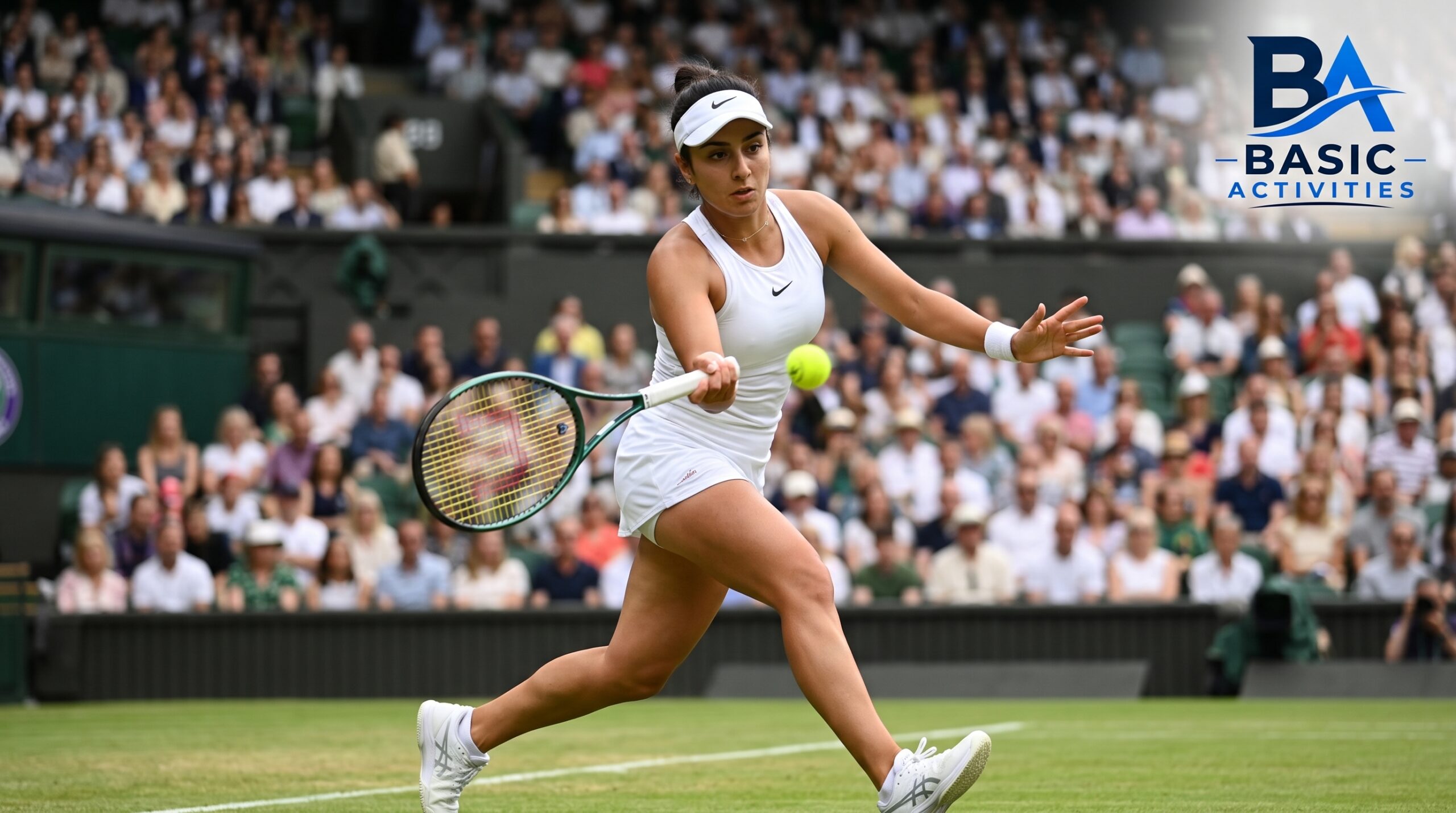
The landscape of women’s professional tennis has continually evolved, producing dynamic talents who carve their paths through grit, technique, and sheer perseverance. Among the most compelling modern stories in British sport is the rise of Sonay Kartal. From navigating the fiercely competitive lower rungs of the International Tennis Federation (ITF) circuit to capturing main-draw victories on the global Women’s Tennis Association (WTA) tour, Kartal has proven that dedication and strategic play can overcome significant hurdles.
Her journey is not one of overnight sensation, but of methodical growth, tactical refinement, and athletic resilience. For tennis enthusiasts, aspiring players, and followers of British tennis, Kartal represents a generation of athletes redefining success through steady determination and high-percentage baseline execution.
Early Beginnings and Junior Development
Sonay Kartal’s tennis journey began in the South East of England. Showing early natural hand-eye coordination and spatial awareness, she entered competitive junior tennis with an appetite for high-intensity rallies. Like many British contemporaries, her junior career demanded balance—juggling intense regional and national training camps with personal education and strength conditioning.
During her formative junior years, Kartal frequently competed against and alongside fellow emerging talents. Those competitive crucibles shaped her mental fortitude. Junior tennis often exposes players to varying court surfaces, irregular match pacing, and high emotional volatility. Learning to manage those dynamics early gave Kartal the poise required to endure protracted baseline battles later in her professional career.
The ITF Pathway: Laying a Winning Foundation
The transition from junior tennis to the professional circuit represents the widest gulf in competitive athletics. For Kartal, the ITF World Tennis Tour served as the foundational proving ground. Beginning in entry-level $15,000 and $25,000 tournaments, she faced seasoned competitors, varied surface conditions, and grueling weekly schedules.
Her breakthrough across ITF events was characterized by disciplined win streaks. Instead of chasing sporadic high-level wildcards, Kartal systematically built a winning mentality by playing dozens of competitive matches across hard and clay courts. Collecting multiple ITF singles titles not only boosted her confidence but also provided the crucial ranking points necessary to step into the WTA qualifying tiers.
Transition to the WTA Tour and Breakthrough Success
Moving up to WTA 250, 500, and 1000 tournaments tests every dimension of a player’s skill set. Ball speeds increase, error margins shrink, and opponents capitalize ruthlessly on short returns. Kartal’s adaptation to this level highlights her tactical maturity.
Kartal made decisive statements on hard courts and grass, demonstrating that her baseline combinations could penetrate high-tier defenses. Reaching deep runs, securing maiden WTA main-draw wins, and qualifying for prestigious events confirmed that she possessed the standard required for the women’s top flight. A standout characteristic of her breakthrough has been her composure under pressure: she maintains a high percentage of first serves and capitalizes cleanly on break point opportunities against top-ranked opponents.
Key Career Milestones and Ranking Journey
Kartal’s ranking ascent highlights a steady, upward trajectory earned match by match.
Breaking into the Top 100
Breaking the top-100 threshold is a milestone that grants direct entry into Grand Slam main draws and transforms a player’s scheduling autonomy. Kartal achieved this through consistent title-winning campaigns at the higher ITF tiers and breakthrough runs at the WTA level.
Piercing the Top 50
Continuing her upward momentum, Kartal pushed her career-high singles ranking inside the top 50. Reaching deep into WTA 1000 tournaments—such as marquee appearances in Indian Wells and Wuhan—solidified her standing among the world’s elite.
Grand Slam Appearances
Grand Slam courts provide the ultimate test of physical stamina and nerve. Whether competing under the grass-court spotlight at Wimbledon or grinding through qualifying rounds at Melbourne, New York, and Paris, Kartal has embraced the atmosphere of Grand Slam tennis, earning praise for her tactical courage against seeded opposition.
Analyzing Sonay Kartal’s Playing Style and Strengths
To understand Kartal’s success, one must look at her mechanical foundation and tactical blueprint. She does not rely solely on raw power; her tennis is grounded in court geography, timing, and point construction.
Baseline Dominance and Counter-Punching
Kartal operates with supreme balance along the baseline. Her forehand features sharp acceleration and heavy topspin, allowing her to pull opponents off the court while maintaining high clearance over the net. On the backhand wing, she stays compact, taking balls on the rise and redirecting pace down the line to flip defensive exchanges into offensive positions.
Serve Mechanics and Return Quality
While she may not possess an overpowering serve, Kartal generates impressive efficiency by varying speed, placement, and spin. Her kick serve creates uncomfortable shoulder-height contact zones for opponents, while her return of serve places continuous pressure on second-delivery balls, creating break opportunities with consistency.
Movement and Physical Stamina
Covering the court requires quick lateral deceleration and recovery. Kartal excels at sliding into defensive shots, resetting her stance, and regaining neutral court positioning. This physical endurance allows her to sustain high rally lengths in third sets without technical breakdown.
Overcoming Adversity: Injuries and Career Resilience
Professional tennis is as much a test of endurance off the court as it is on it. Like many athletes who play a demanding baseline game, Kartal has had to manage physical setbacks, muscle fatigue, and schedule strain.
Navigating periods of injury requires patience, rehab discipline, and the mental strength to watch one’s ranking fluctuate while sidelined. Kartal’s capacity to return from breaks, recondition her body, and immediately post winning results speaks volumes about her professionalism. Rather than rushing recovery, her camp has prioritized sustainable development, ensuring that mechanics and physical readiness align before stepping back onto competitive surfaces.
Sonay Kartal’s Place in British Women’s Tennis
British tennis has experienced a vibrant renaissance over recent seasons, marked by depth and healthy internal competition across the women’s circuit. Alongside players such as Katie Boulter, Emma Raducanu, and Harriet Dart, Kartal forms a crucial pillar of this national surge.
Her presence strengthens the British Billie Jean King Cup squad, offering a dependable singles option who thrives in team-oriented environments. Furthermore, her success provides inspiration for junior British players training within the domestic club system, demonstrating that success can be achieved through consistent development on home soil rather than exclusive foreign academies.
Training Philosophy and Strategic Focus
To remain competitive at the highest level of professional sport, continuous refinement is essential. Kartal and her coaching team focus on three core strategic pillars:
- Service Speed and Variety: Continually increasing flat first-serve speeds to secure free points in high-pressure games.
- Transition and Net Play: Shortening baseline rallies by moving forward to finish points with overheads and controlled volleys.
- Surface Adaptability: Honing footwork adjustments across hard, grass, and European red clay to maintain competitive win rates year-round.
What the Future Holds for Sonay Kartal
With peak competitive years ahead of her, the trajectory for Sonay Kartal remains full of upside. Having established herself inside the top tiers of the WTA rankings, her next focus will be securing deep second-week runs at Grand Slams and targeting WTA tour titles.
As she gains more experience against top-10 seeds, the tactical adjustments she makes will be critical. With her work ethic, baseline discipline, and professional team, Kartal is well positioned to remain a prominent figure in international tennis for years to come.
Frequently Asked Questions (FAQs)
Who is Sonay Kartal?
Sonay Kartal is a British professional tennis player representing Great Britain on the WTA Tour and in international competitions.
What is Sonay Kartal’s highest career ranking?
Kartal has reached a career-high WTA singles ranking inside the top 50, achieving world No. 44.
What is Sonay Kartal’s primary playing style?
She is an aggressive baseline player known for clean ball striking, strong lateral movement, tactical counter-punching, and high-percentage groundstroke execution.
Which Grand Slam tournaments has Sonay Kartal competed in?
Kartal has featured in major tournaments across the tennis calendar, including Wimbledon, the Australian Open, the US Open, and qualifying at Roland Garros.
Where does Sonay Kartal train?
She conducts her training primarily within the United Kingdom, utilizing high-performance training centers in the South East alongside the Lawn Tennis Association (LTA) performance network.