
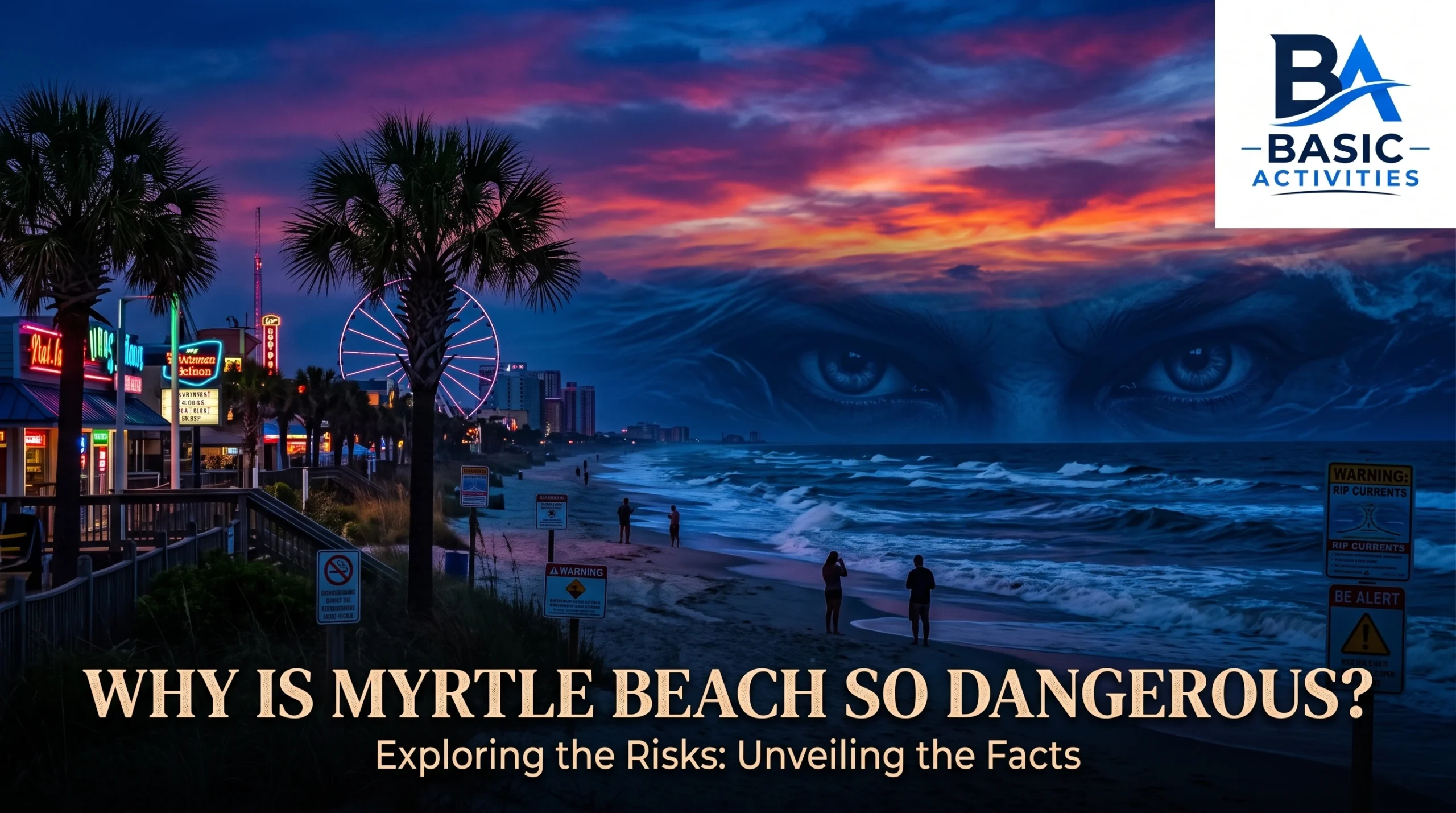
Every year, millions of travelers head to the Grand Strand in South Carolina to enjoy 60 miles of sandy beaches, coastal seafood, boardwalk amusement rides, and championship golf courses. Yet, a quick look at national crime ranking platforms often presents a startling narrative: headlines frequently label Myrtle Beach as one of the most dangerous cities in the United States.
This creates an immediate paradox. How can a family-favorite vacation hub with 19+ million annual visitors also rank alongside major metropolitan danger zones?
To understand why is Myrtle Beach so dangerous according to statistics—and whether that reputation reflects reality—you have to separate raw numbers from the daily reality on the ground. The answer lies in statistical anomalies driven by mass tourism, seasonal population shifts, property theft hotspots, ocean and environmental hazards, and localized nightlife corridors.
The Statistical Reality: Why Crime Rankings Look So Alarming
When looking at databases like NeighborhoodScout, the FBI Uniform Crime Reporting (UCR) program, and statewide data, Myrtle Beach routinely shows crime rates significantly higher than state and national medians.
The Permanent Population vs. Visitor Distortion
The primary mathematical driver behind the question of why is Myrtle Beach so dangerous in statistical reports is population distortion.
- The Resident Base: Myrtle Beach has a permanent resident population of roughly 36,000 to 40,000 people.
- The Visitor Influx: Between 18 and 20 million tourists visit the city and surrounding Grand Strand areas each year.
- The Math Problem: Standard crime rates are calculated as
(Number of Crimes ÷ Permanent Resident Population) × 1,000.
When millions of tourists pass through a city, total incidents (such as petty theft, unattended belongings taken from beaches, vehicle break-ins, and bar fights) naturally rise. However, the formula divides those crimes exclusively by the permanent resident count. This skews the per-capita rate upward, creating an exaggerated statistical profile when compared to non-tourist cities of similar resident size.
Property Crime vs. Violent Crime: What the Numbers Actually Show
Understanding crime in Myrtle Beach requires distinguishing between property crimes and violent offenses. The overwhelming majority of recorded offenses in the area fall into the category of property crime.
| Crime Category | Common Types Reported | Frequency / Primary Risk Factor |
|---|---|---|
| Property Crime | Larceny/Theft, Car Break-ins, Unattended Beach Gear | Accounts for over 70% to 80% of total reported crimes |
| Violent Crime | Aggravated Assault, Robbery, Late-Night Altercations | Highly concentrated in specific nightlife corridors and isolated neighborhoods |
| Regulatory & Nuisance | Disorderly Conduct, Open Container, Traffic Violations | Spikes during peak summer holiday weekends and major festivals |
Why Property Crime Dominates
Tourists on vacation are relaxed, often letting down their guard. Unlocked rental cars, beach bags left unattended near the surf, bicycles left unsecured, and valuables left in plain sight provide opportunistic targets for petty thieves.
Ocean Hazards and Marine Risks Along the Grand Strand
When people ask why is Myrtle Beach so dangerous, they often overlook the fact that the most frequent physical emergencies involve natural elements rather than criminal activity.
1. Rip Currents
Rip currents are strong, narrow channels of water moving rapidly away from the shore. They represent the leading cause of beach rescues and aquatic fatalities along the South Carolina coastline:
- The Danger: Swimmers get pulled out into deeper water and attempt to fight the current directly, leading to physical exhaustion and panic. Myrtle Beach Surf Cams
- Safety Protocol: Never swim against a rip current. Swim parallel to the shoreline until clear of the pull, then angle back toward land. Myrtle Beach Surf Cams
2. Marine Life Encounters
While shark encounters receive extensive media attention, they remain rare. The far more common marine hazards are:
- Stingrays: Resting on the shallow seabed, stingrays can cause painful puncture wounds if stepped on directly. Practicing the “stingray shuffle” (sliding feet along the sand) warns them away. Myrtle Beach Surf Cams
- Jellyfish: Seasonal currents occasionally bring stinging jellyfish close to shore, causing painful but generally non-life-threatening stings. Myrtle Beach Surf Cams
3. Heat Exhaustion and Sun Exposure
The subtropical summer climate brings intense humidity and high temperatures. Ocean breezes frequently mask the intensity of UV exposure, leading to severe sunburns, heat exhaustion, and dehydration.
High-Risk Areas vs. Safe Zones in Myrtle Beach
Crime in Myrtle Beach is not evenly distributed across the map; it is concentrated in identifiable zones during specific hours.
Areas That Require Extra Vigilance
- South Ocean Boulevard (Late Night): Certain sections south of the main boardwalk area experience higher rates of late-night disorderly conduct, loitering, and street-level crime after bars close.
- Unlit Backstreets Off the Main Strip: Walking alone through poorly lit alleyways and side avenues several blocks off Ocean Boulevard late at night increases exposure to muggings or vehicle break-ins.
- Large Public Parking Garages: Multi-level garages near dense entertainment areas can be targets for opportunistic vehicle theft and break-ins if property is left exposed.
Typically Safe, Family-Oriented Areas
- North Myrtle Beach: An independent municipality located north of Myrtle Beach proper, featuring lower crime rates, family-oriented resorts, and quiet residential beach communities.
- The Market Common: A modern, walkable master-planned district with boutique shopping, upscale dining, manicured parks, and dedicated security patrols.
- Arcadian Shores / Kingston Plantation: Gated and resort-style oceanfront communities located away from heavy downtown foot traffic.
- Broadway at the Beach (Daytime & Early Evening): A heavily managed, family-friendly shopping and entertainment complex with private security and police presence.
Traffic, Pedestrians, and Highway Safety Concerns
Road and pedestrian accidents represent another key factor in why is Myrtle Beach so dangerous during peak months.
Congestion on Highway 17 and Ocean Boulevard
During summer peaks, Highway 17 (Bypass and Business), Kings Highway, and Ocean Boulevard become heavily congested. The combination of out-of-town drivers looking for navigation cues, heavy foot traffic near beach crosswalks, golf carts, scooters, and bicycles creates elevated risks for traffic collisions and pedestrian accidents.
Golf Cart and Moped Accidents
Rental golf carts and low-speed vehicles (LSVs) share roadways with regular traffic. Drivers unfamiliar with local traffic regulations or operating them carelessly at night contribute significantly to local roadway injury statistics.
Nightlife, Alcohol, and Seasonal Surges
A significant portion of violent incidents and public disturbances in Myrtle Beach is fueled by late-night alcohol consumption and seasonal event surges.
- The Late-Night Bar Scene: As in many resort towns, bar districts and club venues can experience heated altercations and disorderly conduct between 1:00 AM and 4:00 AM.
- Spring Break and Peak Summer Weekends: Large gatherings of young adults during spring break and summer holidays create crowded environments where alcohol-fueled disputes and petty thefts spike.
- Transient Offender Activity: The seasonal influx of tourists draws seasonal opportunists who specifically target rental properties, vehicles, and distracted vacationers. Hopkins Law Firm
How Myrtle Beach Compares to Other Popular US Beach Towns
Putting Myrtle Beach into regional context helps clarify where it stands relative to other popular East Coast and Gulf Coast tourist hubs.
| Destination | Primary Safety Concerns | Relative Risk Environment |
|---|---|---|
| Myrtle Beach, SC | Property theft, vehicular break-ins, rip currents, late-night strip altercations | Moderate overall; elevated statistically due to tourist-to-resident ratio |
| Daytona Beach, FL | Nightlife crime, vehicle break-ins, pedestrian accidents | Similar statistical distortion driven by major event weeks (Race Week, Bike Week) |
| Panama City Beach, FL | Spring break alcohol incidents, water safety, disorderly conduct | High seasonal variation; quiet off-season with summer property crime spikes |
| Virginia Beach, VA | Oceanfront petty theft, occasional late-night boardwalk disputes | Low in northern residential zones; moderate around the central resort strip |
Essential Safety Tips for Visiting Myrtle Beach
Visiting Myrtle Beach safely is straightforward when you apply standard situational awareness.
- Lock Your Vehicle and Hide Belongings: Never leave purses, wallets, electronics, or beach gear visible inside parked vehicles. Always lock your car doors and roll up windows completely.
- Keep Beach Valuables Minimal: Take only what you need to the sand. Avoid leaving smartphones, expensive cameras, and wallets unattended while swimming. Hopkins Law Firm
- Observe Beach Warning Flags: Always swim within view of an on-duty lifeguard. Heed the colored flag system (Green = Low Hazard, Yellow = Medium Hazard, Red = High Hazard/Rough Conditions, Double Red = Water Closed to Public, Yellow with Black Dot = Marine Pest). Myrtle Beach Surf Cams
- Stay in Well-Lit Corridors at Night: Avoid walking alone on unlit sections of the beach or unfamiliar side streets after dark. Use rideshares or stay on main thoroughfares. Hopkins Law Firm
- Choose Reputable Accommodations: Research hotel and resort reviews thoroughly prior to booking. Family resorts located in the northern corridor or within gated resort zones offer higher security standards.
Conclusion: Balancing Perception with Reality
When examining why is Myrtle Beach so dangerous, the underlying answer is a combination of mathematical distortion, opportunistic property crime, natural ocean hazards, and late-night nightlife incidents.
While online ranking sites show elevated per-capita crime rates because millions of tourists are measured against a small permanent population base, the vast majority of visitors experience safe, trouble-free vacations. By practicing common-sense travel precautions—protecting your personal property, avoiding unlit areas late at night, and respecting ocean safety rules—you can comfortably enjoy everything the Grand Strand has to offer.
Frequently Asked Questions (FAQs)
Why is Myrtle Beach considered so dangerous in national rankings?
Myrtle Beach appears dangerous in national rankings primarily because per-capita crime formulas calculate total crimes against the small permanent resident population (~36,000–40,000) rather than factoring in the 18+ million tourists who visit annually. This statistical distortion inflates the per-capita rate.
Is Myrtle Beach safe for a family vacation?
Yes, Myrtle Beach is generally safe for families. Millions of families visit every year without incident. Staying in family-oriented areas like North Myrtle Beach, The Market Common, or mid-to-north resort properties significantly reduces safety concerns.
What is the most common crime in Myrtle Beach?
Property crime is the most frequent offense, particularly petty larceny, vehicle break-ins, and theft of unattended personal property on the beach or around resort parking areas. Violent crime is significantly less common and mostly confined to isolated late-night disputes.
Which parts of Myrtle Beach should visitors avoid?
Visitors should exercise extra caution along poorly lit sections of South Ocean Boulevard late at night and avoid deserted side streets and unlit beach areas after hours.
Is it safe to swim in the ocean at Myrtle Beach?
Swimming is generally safe when lifeguards are present and water condition flags are observed. The primary natural hazards are rip currents and stingrays. Swimmers should learn how to navigate rip currents, practice the “stingray shuffle,” and avoid swimming alone or after dark.