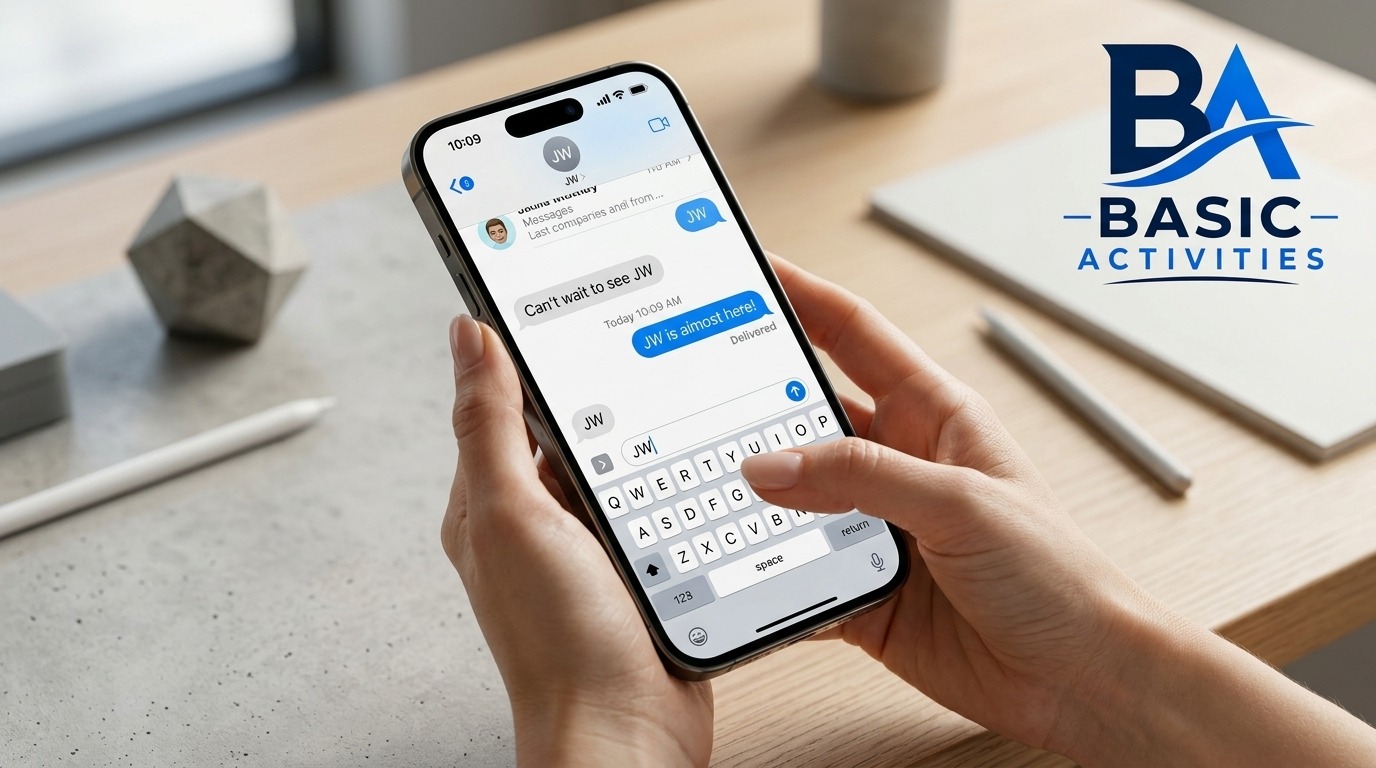
Texting abbreviations move at breakneck speed. One minute everyone is typing out full questions, and the next, your screen fills with acronyms like tbh, ngl, rn, and jw. If you have ever opened a chat and wondered, “what does jw mean in text message?”, you are certainly not alone.
Short abbreviations make casual conversations efficient, but they also strip out vocal inflection, body language, and facial cues. Without that extra context, a two-letter shorthand can leave you pausing to evaluate whether someone is genuinely curious, asking a favor, or trying to soften an awkward question.
Here is an in-depth breakdown of what “JW” stands for, how people use it, the conversational psychology behind it, and when you should—or shouldn’t—include it in your own messages.
What Does JW Stand For? The Quick Answer
In nearly every texting and social messaging context, JW stands for:
“Just Wondering”
People type “jw” as a low-effort shorthand to indicate casual inquiry. It signals that the sender is curious about something, but they do not want to sound demanding, nosy, or overbearing.
Depending on the sender’s typing style, you might see it written in several ways:
- jw (all lowercase, standard in rapid everyday texts)
- JW (capitalized, common when starting a sentence or on auto-capitalize keyboards)
- j/w (less common today, but occasionally seen on discussion boards)
Why People Use “JW” in Modern Conversations
Text communication lacks vocal warmth. When you ask a direct question in text—such as “Are you busy tonight?” or “Who invited him?”—the lack of vocal inflection can unintentionally make the inquiry sound blunt or interrogative.
Adding “jw” acts as a conversational cushion:
- It softens directness: It removes the intensity from an inquiry, letting the other person know there is no hidden agenda.
- It sets low expectations: It subtly communicates that the sender does not urgently require an immediate or detailed answer.
- It protects social ego: If someone asks a question that might get rejected (like asking if someone is free to hang out), appending “jw” provides plausible deniability: “No pressure, I was just wondering!”
- It speeds up typing: Cutting twelve keystrokes down to two helps keep real-time exchanges quick and snappy.
Common Examples of “JW” in Everyday Text Messages
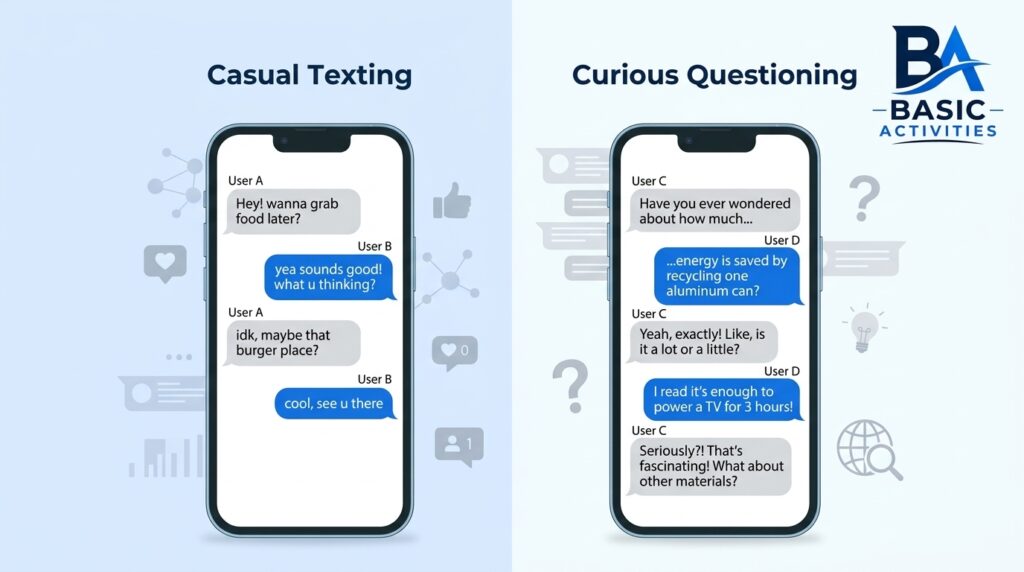
Understanding shorthand is easiest when you see it in the wild. Here are four standard scenarios where “jw” naturally pops up:
1. Casual Curiosity
- “Are you heading to Sarah’s dinner later? jw”Translation: The sender wants to know your plans, but it’s completely fine if you aren’t going.
2. Seeking Light Recommendations
- “jw where did you get that green jacket from yesterday’s story?”Translation: They admire the jacket, but it’s an effortless, passing thought rather than an urgent shopping request.
3. Testing the Waters Before Making an Invitation
- “jw if you had plans this weekend?”Translation: They are considering asking you to hang out, but want to gauge your availability first without putting you on the spot.
4. Clarifying Confusing Information
- “Did class get canceled tomorrow morning or did I misread the email? jw”Translation: A quick fact-check without sounding panicked or accusatory.
The Subtle Psychology of “JW”: Tone and Politeness
While abbreviations are often viewed purely as time-savers, many function as pragmatic markers—linguistic tools that help calibrate interpersonal dynamics.
When an acquaintance texts:
“Are you still working at the agency?”
The recipient might wonder: Why are they asking? Are they looking for an intro? Did they hear a rumor?
When rewritten as:
“Are you still working at the agency? jw”
The mood changes immediately. The inquiry becomes harmless and informal. However, this sword cuts both ways. Overusing mitigating acronyms like “jw,” “lol,” or “haha” can occasionally make messages sound passive or hesitant. Confidence often stems from directness, so while “jw” works well with friends, using it repeatedly can make you seem tentative.
Alternative Meanings of JW in Other Contexts
While “just wondering” represents roughly 95% of text message occurrences, context always dictates meaning. Depending on the forum or community, “JW” can refer to:
| Context | Meaning | How to Identify It |
| Everyday Texting / DMs | Just Wondering | Placed right before or after a question. |
| Religious Discussions | Jehovah’s Witnesses | Used in conversations discussing denominations, beliefs, or outreach. |
| Beverages & Dining | Johnnie Walker | Accompanied by words like “Black Label,” “neat,” or “whisky.” |
| Fashion / Streetwear | JW Anderson | Found in clothing hauls, style threads, or luxury retail chats. |
| Pop Culture / Gaming | John Wick / Jurassic World | Mentioned alongside movies, streaming, box office figures, or games. |
If the acronym is followed by a question mark, you can be practically certain the person means “just wondering.”
How to Respond When Someone Texts You “JW”
Responding to a message containing “jw” is straightforward because the sender has already signaled that the stakes are low. Here are a few ways to reply based on your situation:
If You Want to Answer Fully
Provide the answer directly in the same casual register:
- Sender: “Did you finish the assignment yet? jw”
- You: “Yeah, turned it in an hour ago! Took longer than I expected though.”
If You Don’t Have Time for a Detailed Answer
Because “jw” lowers urgency, a brief reply is completely acceptable:
- Sender: “Are you going to the gym today? jw”
- You: “Probably not today, swamped with work!”
If You Want to Know Why They Asked
Sometimes a question seems a bit random, and you might want to understand what prompted it:
- Sender: “Are you driving down to Austin this weekend? jw”
- You: “Yeah I am! Why, what’s up?”
Similar Texting Slang You Should Know
If you are expanding your modern digital vocabulary, “jw” is part of a larger cluster of courtesy and tone-softening acronyms:
- IDC / IDK: I don’t care / I don’t know. Expresses uncertainty or indifference.
- TBH / NGL: To be honest / Not gonna lie. Used when admitting an opinion frankly.
- RN: Right now. Indicates current availability or status.
- HMU: Hit me up. An open invitation to get in touch.
- FWIW: For what it’s worth. Adds useful context without imposing judgment.
- OOTL: Out of the loop. Used when asking for an explanation about recent events.
Combining these helps build smooth, informal exchanges that reflect natural spoken rhythms.
When to Avoid Using “JW”
While “jw” is a staple of personal chats on iMessage, WhatsApp, Snapchat, and Instagram, there are environments where it is best left unused.
1. Professional and Formal Emails
Avoid using “jw” when communicating with clients, managers, or external partners. Instead of writing:
“jw if the Q3 budget was approved?”
Opt for standard professional phrasing:
“Could you provide a quick update on whether the Q3 budget has been approved?”
2. Time-Sensitive or Critical Situations
If an answer is required urgently—such as confirming safety, medical needs, or time-critical deadlines—using “jw” gives the wrong impression. It signals that the question is trivial, which may lead the recipient to put off answering.
3. Serious Personal Disagreements
During sensitive discussions or relationship conflicts, informal acronyms can read as dismissive or passive-aggressive. In those moments, clear, complete sentences communicate care and respect far better than texting shorthand.
Frequently Asked Questions (FAQs)
What does “jw” mean from a crush?
When someone you like texts you “jw,” it often means they are testing the waters to see what you are doing or whom you are with, without wanting to seem overly eager. It is a subtle way to gauge your interest while keeping their cool.
Is “jw” capitalized in text messages?
Either format works. Lowercase (“jw”) is overwhelmingly preferred in fast mobile chats and group conversations, while uppercase (“JW”) is usually the result of auto-capitalization at the start of a line.
Can “JW” sound passive-aggressive?
Context matters. If paired with an intrusive question—for instance, “Did you really think that was a good idea? jw”—it can come across as sarcastic or passive-aggressive. In neutral questions, however, it is almost always friendly and harmless.
What is the difference between “JW” and “IDK”?
“JW” stands for just wondering (indicating a question), whereas “IDK” stands for I don’t know (indicating an answer or lack of information).
Conclusion
Text language is constantly evolving, but its core purpose remains the same: helping us connect quickly while conveying subtle shifts in tone. Now that you know what jw means in text message, you can read between the lines of your daily chats with confidence.
Whether you’re softening a casual question or deciphering a message from a friend, “jw” is simply a digital way of saying: “I’m curious, but no pressure at all.”