
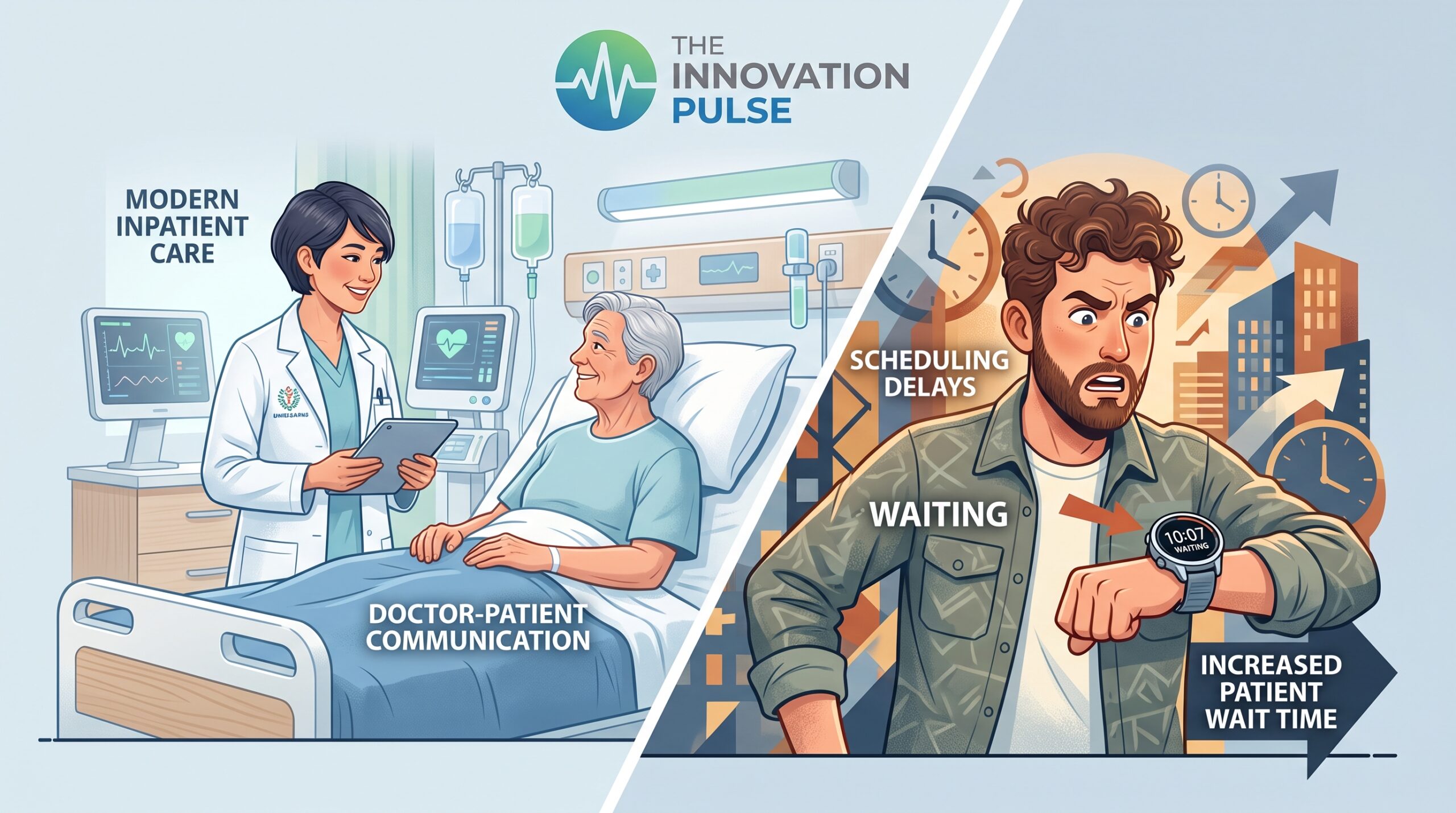
The English language is filled with near-homophones and sound-alike phrases that easily lead to confusion in everyday writing and professional communication. One of the most common mix-ups occurs between inpatient vs impatient. While they sound remarkably similar when spoken aloud, they belong to completely different worlds of grammar, medicine, and human behavior.
One term refers strictly to healthcare management and hospital admissions, while the other describes an emotional state, a lack of patience, or an eagerness for something to happen. Using the wrong word in an email, medical report, or casual message can completely change the intended meaning.
Understanding the distinction between inpatient and impatient will ensure your writing remains accurate, clear, and professional across clinical, business, and everyday contexts.
1. Defining “Inpatient”: What Does It Mean in Healthcare?

The term inpatient (written as a single compound word) is used primarily within medical, clinical, and healthcare settings. It operates as both a noun and an adjective.
- As a noun: An inpatient is a patient who is formally admitted to a hospital, clinic, or specialized treatment center to stay overnight or for an extended period under continuous professional care.
- As an adjective: It describes services, care plans, or facilities designed specifically for admitted patients (e.g., inpatient care, inpatient rehabilitation, inpatient surgery).
Clinical Admission Criteria
For a patient to receive inpatient status, a physician must write a formal admission order. Inpatient services involve close monitoring, round-the-clock nursing care, and continuous clinical oversight.
2. Inpatient vs Outpatient: Understanding the Clinical Spectrum
To fully grasp the scope of inpatient care, it helps to contrast it with outpatient care.
| Feature | Inpatient Care | Outpatient Care |
|---|---|---|
| Duration of Stay | Overnight, multi-day, or weeks | Same-day; returns home within hours |
| Facility Type | Hospital wards, ICU, residential rehab | Outpatient clinics, day surgery, diagnostics |
| Level of Monitoring | 24/7 dedicated nursing and physician care | Brief post-procedure recovery monitoring |
| Billing & Insurance | Billed under hospital/facility coverage | Billed under clinical or outpatient benefits |
Common examples of inpatient care include major orthopedic surgeries, intensive care recovery, specialized cardiac monitoring, and comprehensive residential addiction treatment.
3. Defining “Impatient”: Emotional and Behavioral Meanings

Unlike its medical counterpart, impatient (spelled with an “m”) is strictly an adjective that describes a psychological or emotional reaction. It originates from the prefix im- (meaning “not”) added to the root word patient (meaning able to accept delays or problems without becoming annoyed).
Core Definitions of Impatient
- Restless or irritable under delay: Showing an inability to wait calmly (e.g., tapping your foot in a long checkout line).
- Eager or enthusiastic: Strongly desiring an upcoming event or outcome to occur quickly (e.g., impatient to start a new journey).
- Intolerant of mistakes: Exhibiting low tolerance for obstacles, inefficiency, or delays.
4. Etymology and Linguistic Roots
Examining where these two words come from provides helpful insight into why they are constructed so differently:
- Inpatient: Formed by combining the English preposition in (referring to being inside a physical facility) and the Latin noun root patiens (one who suffers or undergoes treatment).
- Impatient: Formed directly from Latin impatientem, combining the negative prefix im- (not) with patientia (forbearance, endurance, or patience).
5. Side-by-Side Comparison: Inpatient vs Impatient
| Attribute | Inpatient | Impatient |
|---|---|---|
| Part of Speech | Noun or Adjective | Adjective only |
| Primary Domain | Medicine, Healthcare, Hospitals | Psychology, Behavior, Everyday Life |
| Spelling Core | Begins with In- (inside) | Begins with Im- (not) |
| Antonym | Outpatient | Patient (calm, enduring) |
| Example Phrase | “admitted for inpatient treatment” | “grew impatient while waiting” |
6. Common Usage Mistakes and Real-World Examples
Confusing these two terms can create unintentionally humorous or confusing sentences. Here are examples of incorrect vs. correct usage:
- Incorrect: The doctor advised three days of impatient care for recovery.
- Correct: The doctor advised three days of inpatient care for recovery.
- Incorrect: He became inpatient when the meeting started twenty minutes late.
- Correct: He became impatient when the meeting started twenty minutes late.
- Incorrect: Our medical center offers both outpatient and impatient therapies.
- Correct: Our medical center offers both outpatient and inpatient therapies.
7. Simple Tricks and Mnemonics to Remember the Difference
When writing under a deadline, use these quick mental associations:
- INpatient = IN the hospital: The prefix IN reminds you that the individual stays inside the clinical facility overnight.
- IMpatient = I’M restless: The letters IM match the phrase “I’m ready right now!” or “I’m not waiting.”
8. Professional Communication and Editorial Impact
Selecting the correct term preserves clarity across professional documentation:
- In Healthcare Documentation: Accurate terminology ensures medical billing, insurance claims, and clinical charts are processed correctly without administrative rejection.
- In Business and Content Writing: Proper grammar reinforces authority and editorial standards, preventing distracting errors in client-facing materials.
Frequently Asked Questions (FAQ)
Is “inpatient” ever written as two words?
No. In modern English, inpatient is written as a single compound word without spaces or hyphens.
Can an inpatient also be impatient?
Yes. An admitted hospital patient (inpatient) might become irritable or eager to be discharged (impatient).
What is the noun form of “impatient”?
The noun form of impatient is impatience, which refers to the state or quality of being impatient.
Conclusion
Understanding the difference between inpatient vs impatient comes down to recognizing context. Inpatient relates to staying inside a hospital or clinical setting for continuous medical care, whereas impatient reflects a feeling of restlessness, eagerness, or low tolerance for delays. Applying the simple mnemonic—in the hospital versus I’m not waiting—will keep your writing accurate and clear every time.