

When historians of modern American business look back at the late 2010s and early 2020s, two corporate stewardship narratives stand out for their sheer operational complexity: Oracle’s aggressive pivot toward hyperscale cloud computing under Safra Catz, and AT&T’s decisive unwinding of media conglomerate ambitions to refocus on core telecommunications under John Stankey.
At first glance, enterprise software and legacy telecom occupy distinct sectors of the modern economy. Yet, analyzing Safra Catz and John Stankey side by side reveals deep parallels in modern executive leadership. Both leaders took the helm of established corporate empires facing inflection points: Catz navigating Oracle’s high-stakes transition from on-premise licensing to cloud infrastructure (OCI), and Stankey tasked with refocusing AT&T after decades of costly, debt-laden media diversifications.
Their tenures offer indispensable lessons in capital allocation, operational rigor, strategic shedding, and the convergence of foundational connectivity with enterprise software.
The Divergent Paths to the C-Suite
To understand the decision-making of both leaders, one must examine the operational crucibles in which their management philosophies formed. Neither executive was an overnight appointment; both spent decades operating behind the scenes before assuming sole control.
Safra Catz arrived at Oracle in 1999 from an investment banking background, quickly establishing herself as founder Larry Ellison’s most trusted execution engine. While Ellison served as the visionary technologist and provocateur, Catz mastered the balance sheet, operational integration, and the complex merger and acquisition engine that swallowed companies like PeopleSoft, Siebel, and NetSuite. When she was appointed co-CEO alongside Mark Hurd in 2014, and subsequently became sole CEO in 2019, her mandate was clear: convert Oracle’s vast enterprise install base into durable, recurring cloud revenue without sacrificing margin discipline.
John Stankey’s trajectory was forged inside the telecommunications apparatus. Joining Southwestern Bell in 1985, Stankey climbed through network engineering, operations, and corporate strategy as the company morphed through successive mergers into the modern AT&T. Before succeeding Randall Stephenson as CEO in July 2020, Stankey was charged with managing some of the firm’s most complicated integrations, including the turbulent oversight of WarnerMedia. He took over a company weighed down by roughly $160 billion in net debt, facing investor skepticism, and needing massive capital deployment for 5G and fiber deployment.
Capital Allocation Under Scrutiny: Two Approaches to M&A and Debt
Strategic corporate leadership is ultimately defined by where capital flows and where it is pulled back. The career chapters of Safra Catz and John Stankey provide a stark case study in opposite corporate lifecycle phases.
Safra Catz and the Calculated Big-Ticket Bet
Oracle historically grew through tactical acquisitions, but Catz’s tenure as sole CEO is distinguished by precision. Her hallmark deal—the $28.3 billion acquisition of electronic healthcare records giant Cerner in 2022—demonstrated a willingness to commit substantial balance-sheet resources to capture a vertical industry entirely. Rather than chasing generic cloud workloads where AWS and Microsoft held first-mover advantages, Catz directed capital into mission-critical clinical ecosystems that could be ported to Oracle Cloud Infrastructure (OCI).
John Stankey and the Art of Strategic Unwinding
Stankey took the opposite, equally difficult path: corporate disentanglement. Inheriting an AT&T burdened by the DirecTV and Time Warner mega-mergers, Stankey recognized that running an entertainment Hollywood studio was fundamentally incompatible with the capital requirements of broadband buildouts. In 2021 and 2022, Stankey orchestrated the structural spinoff of WarnerMedia (merging it with Discovery to create Warner Bros. Discovery) and separated DirecTV. This strategy prioritized deleveraging, returning capital discipline to the core network, and restoring investor trust.
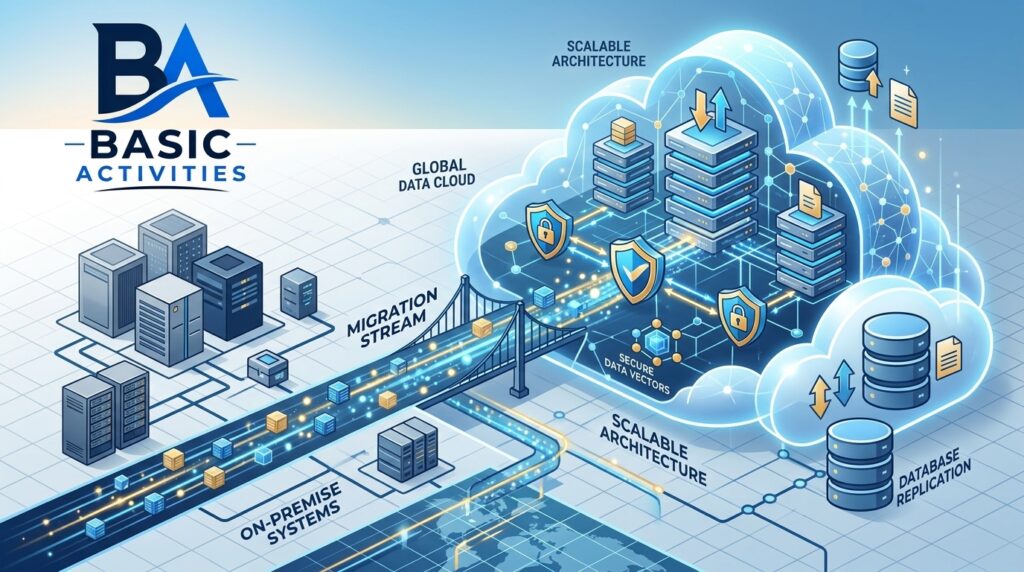
Navigating the Shift to Enterprise Cloud Infrastructure
Under Safra Catz, Oracle confronted an existential challenge: many industry observers had prematurely declared the cloud wars over, assuming AWS, Microsoft Azure, and Google Cloud had permanently divided the landscape.
Catz’s execution strategy relied on three structural pillars:
- Defending Database Hegemony: Ensuring that Oracle Database workloads had distinct performance and pricing advantages when run on OCI rather than third-party hyper-scalers.
- Next-Generation Cloud Architecture: Investing in Gen 2 Cloud architecture, emphasizing bare-metal computing and superior networking performance aimed directly at intensive enterprise AI workloads.
- Multi-Cloud Partnerships: Overcoming long-standing rivalries to form deep interoperability partnerships with Microsoft Azure and Google Cloud, acknowledging enterprise customers’ refusal to be locked into a single provider.
Catz maintained Oracle’s operational margins throughout this intensive capital expenditure cycle, balancing traditional software support revenue while cloud infrastructure matured into a major growth vector.
Rebuilding the Modern Pipe: The Broadband and 5G Turnaround
While Catz focused on moving enterprise workloads to the cloud, John Stankey was busy re-engineering the foundational network pipes that deliver digital traffic.
Telecommunications is notoriously capital-intensive. Wireless spectrum auctions, millimeter-wave infrastructure, and fiber trenching demand billions in upfront liquidity with payback horizons measured in decades. Stankey cut through the noise by narrowing AT&T’s strategic mandate to two core priorities:
- Ubiquitous Fiber Footprint: Expanding AT&T Fiber to millions of customer locations, acknowledging that consumer broadband loyalty and business backhaul both rely on physical glass in the ground.
- Disciplined 5G Deployment: Eschewing splashy, speculative 5G use-case promotions in favor of reliable, mid-band spectrum rollouts that improve baseline network throughput and churn rates.
By stripping out media operations, Stankey unlocked the cash flow necessary to fuel this infrastructure push without imperiling AT&T’s dividend or balance sheet viability.

The Hidden Interdependence: Telecom Infrastructure Meets Cloud Scale
While Safra Catz runs a tech giant and John Stankey helms an infrastructure titan, the enterprise landscapes they navigate are inextricably linked.
Cloud computing cannot exist without carrier-grade telecommunications networks; high-performance data centers require terabit-scale fiber interconnection to function. Conversely, telecommunications providers have become massive consumers of enterprise cloud platforms. AT&T itself has undertaken major multi-year migrations, offloading non-core IT functions and network virtualization workloads to hyperscale partners, while utilizing Oracle databases for mission-critical billing and network routing records.
When analyzing the intersection of leaders like Safra Catz and John Stankey, one sees the two halves of modern digital commerce: the compute engine and the communication channel. As generative AI and edge computing demand higher data density and lower latency, the coordination between telecom networks and database providers becomes essential.
Operational Cultures: Financial Engineering vs. Operational Execution
Both Catz and Stankey have faced characterizations from industry critics regarding their management playbooks:
- The Financial Engineer Moniker: Catz has occasionally been viewed by Wall Street through the lens of cost discipline, stock repurchases, and margin optimization. Yet her longevity stems from a granular operational grasp; she understands Oracle’s cost centers intimately, allowing the company to sustain high operating margins while funding aggressive data center expansions globally.
- The Telecom Restructuring Operator: Stankey, having spent decades in a regulated, utility-like corporate environment, was often seen as an operational pragmatist rather than an ideological visionary. Yet his tenure proved that pragmatism was precisely what AT&T required. It took operational grit, rather than visionary posturing, to successfully carve out multibillion-dollar units and refocus a 150,000-person workforce on pure connectivity.
Leadership Lessons for Enterprise Executives
Studying the tenures of both executives yields practical takeaways for business leaders across industries:
1. Know Your True Competitive Moat
Safra Catz recognized that Oracle’s ultimate asset was the mission-critical business data stored in its systems. Rather than trying to be everything to every consumer, Oracle focused on high-value, highly complex enterprise operations.
2. Recognize When a Sunk Cost Is a Distraction
John Stankey’s willingness to cleanly exit media assets proved that holding onto a thesis that no longer fits corporate capabilities destroys value. Acknowledging a pivot and executing it cleanly preserves enterprise health.
3. Maintain Cash-Flow Realism During Tech Transitions
Both leaders navigated transitional eras by preserving operating cash flows. Transforming an enterprise model (from software licenses to cloud subscriptions, or from media conglomerates to fiber buildouts) requires steady base revenue to survive the multi-year valley of capital expenditure.
Conclusion: Stewardship in an Era of Radical Realism
The business world often celebrates charismatic founders who launch new paradigms from garages. However, the harder and often more consequential work in mature economies is corporate stewardship: guiding multi-hundred-billion-dollar organizations through generational technological shifts.
Safra Catz positioned Oracle as a resilient, high-growth cloud and AI infrastructure contender when many thought its prime had passed. John Stankey transformed AT&T from a debt-saddled, unfocused media giant back into a lean telecommunications infrastructure company. Though their tools and sectors differ, both executives exemplify a return to executive realism—balancing bold strategic commitments with uncompromised operational discipline.
Frequently Asked Questions (FAQs)
What connects Safra Catz and John Stankey in business discussions?
Safra Catz (CEO of Oracle) and John Stankey (CEO of AT&T) are frequently examined together by market analysts and corporate strategists as prime examples of Fortune 500 executive turnaround leadership. Both took over historic tech/telecom giants at critical crossroads, successfully pivoting their companies away from previous strategic entanglements toward focused, high-margin modern infrastructure.
How did Safra Catz transform Oracle’s market position?
Under Catz’s operational leadership, Oracle successfully shifted its revenue model from traditional on-premise software licensing to high-margin recurring cloud subscriptions. She oversaw the aggressive buildout of Oracle Cloud Infrastructure (OCI), spearheaded strategic multi-cloud integrations with competitors, and directed the acquisition of Cerner to capture high-value enterprise verticals.
What was John Stankey’s primary strategic objective upon becoming AT&T CEO?
Stankey’s core mandate was debt reduction and corporate simplification. He systematically divested non-core media acquisitions—most notably orchestrating the spinoff of WarnerMedia and separating DirecTV—to channel AT&T’s capital expenditure directly into core 5G cellular network expansion and fiber broadband infrastructure.
How do telecom giants like AT&T and software giants like Oracle collaborate?
Telecom and enterprise software firms have a deep symbiotic relationship. Telecom operators rely on enterprise databases and cloud platforms for customer billing, network optimization, and secure infrastructure. Meanwhile, cloud providers depend on telecommunications fiber networks to connect globally distributed data centers and deliver low-latency cloud access to enterprise clients.