
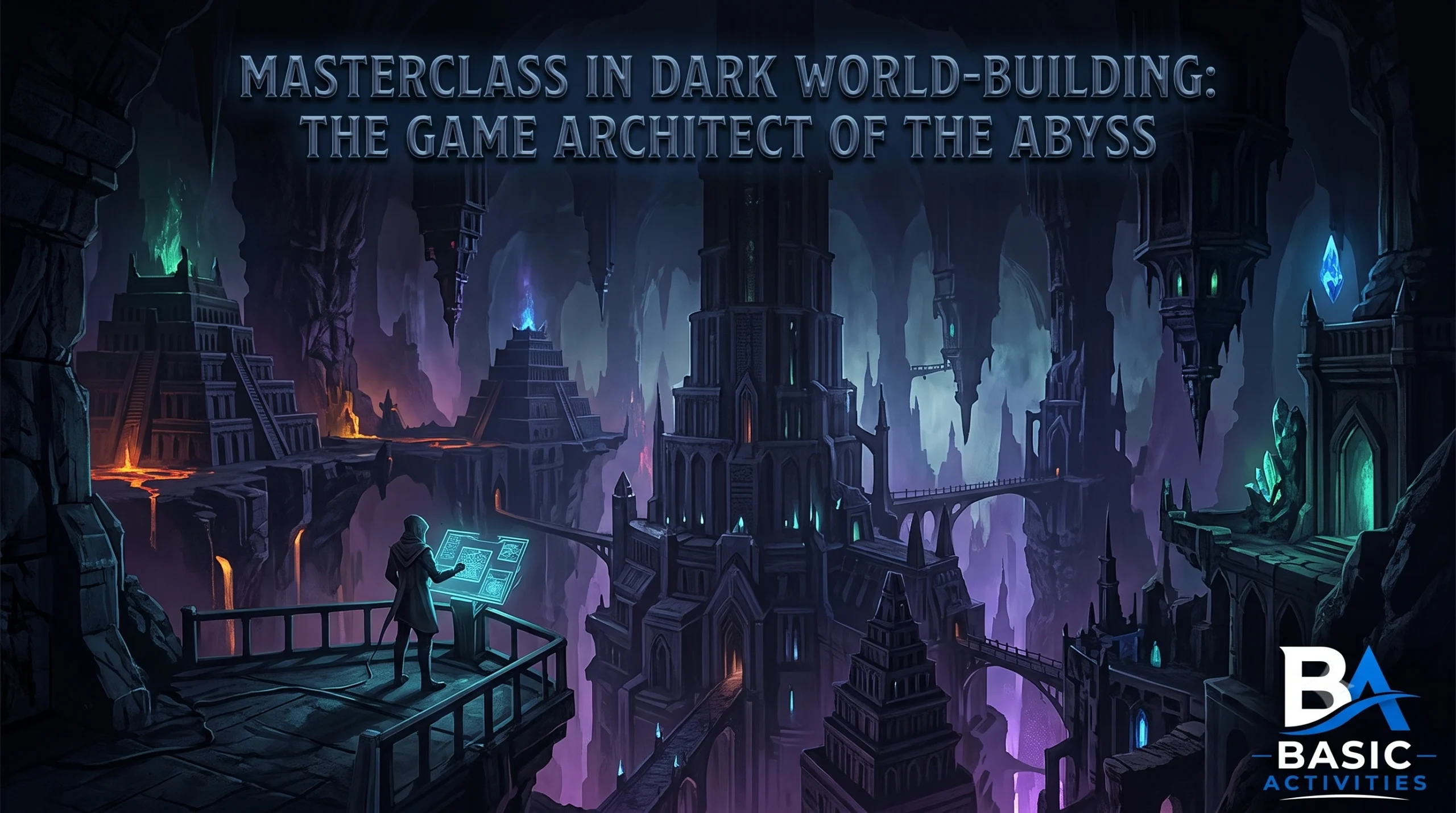
The Emergence of the Game Architect of the Abyss in Modern Digital Storytelling
In the rapidly evolving landscape of contemporary game design, few narrative and structural roles evoke as much fascination as that of the game architect of the abyss. Historically, digital games focused heavily on linear progression, steering players through surface-level environments that mirrored familiar landscapes, predictable dungeons, and conventional castle structures. However, as player expectations shifted toward darker themes, high-stakes survivability, and environmental mystery, the demand for intricate subterranean and abyssal architecture grew exponentially. The concept represents both a literal narrative trope—the mastermind who builds and oversees treacherous underground realms—and a metaphorical archetype for level designers who engineer terrifyingly vast, multi-layered game spaces. By moving away from bright, sunlit meadows and structured town hubs, this design philosophy forces players to confront claustrophobia, verticality, and the psychological weight of descending into the unknown. The shift toward abyssal game architecture reflects a broader desire in modern gaming for experiences that test player resilience through non-linear exploration, environmental storytelling, and relentless subterranean danger.
To understand why this archetype holds such sway over modern gaming culture, one must look at how digital spaces influence human emotions. Surfacing from the depths of early dungeon crawlers into modern open-world visual masterpieces, the game architect of the abyss utilizes deep-level spatial design to generate organic tension. Rather than relying solely on sudden jump scares or inflated monster statistics, these designers use spatial geometry, fading light sources, and disorienting architecture to build sustained anxiety. The player is not simply walking down a corridor; they are descending into an oppressive world that feels deliberately engineered to reject human presence. Every stone, abyssal fissure, and crumbling monument communicates a ancient civilization’s downfall or a cosmic entity’s malevolent expansion. By mastering this delicate balance between structural decay and systemic intentionality, dark fantasy games transform simple navigation into an intense emotional journey where survival feels hard-won and every upward step offers immense relief.
Furthermore, the rise of web literature, light novels, and indie reverse-dungeon crawlers has expanded the footprint of this design ethos across global media. Narrative tropes centered around protagonists who awaken as abyssal masterminds or dungeon builders have surged in popularity. In these stories and games, the protagonist does not merely navigate a pre-built maze; they take on the active role of the game architect of the abyss, crafting traps, managing minion ecosystems, and manipulating spatial rules to thwart incoming heroes. This dynamic subversion of classic RPG conventions demonstrates how deeply rooted the fantasy of dungeon construction has become. Whether viewed through the lens of a level designer balancing a AAA dark action RPG or a player managing a subterranean empire in a strategy title, the structural principles governing deep-world design remain fundamentally interconnected, driving new innovations in mechanics, spatial flow, and world-building.
Deciphering the Core Mechanics: How the Game Architect of the Abyss Constructs Unforgiving Systems
At the heart of any successful dark fantasy game lies a framework of interconnected mechanics that reinforce the atmospheric horror of the deep. When analyzing how the game architect of the abyss constructs these systems, the first element to examine is resource scarcity paired with spatial risk. In surface-level environments, players often enjoy safe zones, abundant light, and easy fast-travel mechanics. Conversely, deep abyssal zones strip away these safety nets, replacing them with deteriorating visibility, limited inventory space, and environmental hazards that actively degrade equipment or drain player vital statistics. The structural setup ensures that every meter of downward progress incurs a tangible cost. By tying mechanical survival directly to spatial exploration, designers transform simple map traversal into a strategic puzzle where overextending into the dark inevitably leads to catastrophic failure.
Another fundamental mechanical pillar is the implementation of verticality and structural instability. A master level designer building an abyssal realm avoids flat, predictable grid layouts. Instead, they favor multi-tiered chasms, winding spiral staircases, precarious rope bridges, and hidden vertical shortcuts that force players to reorient their spatial awareness constantly. This deliberate architectural complexity creates a sense of vertigo and disorientation. When a player gazes down into a bottomless pit or looks up at massive, shadow-draped arches, the physical scale of the world reinforces their isolation. Mechanically, verticality introduces high-risk movement dynamics, where falling damage, crumbling ledges, and gravity-based enemy encounters become just as lethal as combat engagements. The environment itself becomes an active adversary designed by the game architect of the abyss to punish reckless movement and reward meticulous observation.
In addition to verticality, dynamic enemy placement and territorial ecosystems play a crucial role in maintaining mechanical tension. In a standard level design model, enemies often patrol static paths, waiting for the player to draw near. However, abyssal game design relies on reactive, interconnected ecosystems where subterranean creatures interact with both the environment and each other. Lurking predators might utilize dark ceilings to drop on unsuspecting travelers, while massive roaming entities stalk deep chasms, forcing players to hide within narrow rock crevices. By creating an environment where enemies adapt to the ambient darkness and leverage structural bottlenecks, the game architect of the abyss ensures that no two playthroughs feel entirely safe. The mechanics operate as a living engine of adversity, forcing players to continuously rethink their combat strategies and inventory usage.
Environmental Storytelling and Deep-Sea Fantasy Design Principles
Environmental storytelling is the lifeblood of abyssal game construction. When direct exposition and dialogue are sparse, the physical environment must carry the full burden of narrative delivery. The game architect of the abyss accomplishes this by burying history within the architecture itself. Ancient, ruined pillars carved with forgotten runes, sunken cities preserved in subterranean lakes, and massive skeletal remains embedded in cavern walls all communicate a rich history without speaking a single word. Every room serves as a silent museum documenting the rise and fall of former inhabitants. When players observe how an abyssal structure was built—whether through crude stone carving or advanced, preternatural engineering—they uncover clues regarding what lurks at the lowest levels and why the realm descended into ruin in the first place.
To make these environments resonate emotionally, designers adhere to specific atmospheric lighting and audio principles. In total darkness, light is not merely a visual aid; it is a precious gameplay mechanic and a beacon of hope. The strategic placement of bioluminescent flora, glowing magma vents, or flickering braziers guides the player’s eye toward key objectives and safe resting areas. Conversely, pitch-black corridors hide potential ambushes and secret passages, encouraging cautious exploration. Audio design complements this visual hierarchy through subtle acoustic cues: distant echoes of dripping water, low-frequency rumbles from shifting tectonic plates, and unseen creature scuttling across stone surfaces. These sensory details establish an oppressive ambience that keeps player tension high even when no immediate threats are visible on screen.
| Design Element | Traditional Surface Level | Abyssal Level Design |
| Lighting | Static sunlight, wide visibility | Dynamic shadows, bioluminescence, torches |
| Spatial Layout | Open fields, clear sightlines | Vertical shafts, narrow chasms, looping paths |
| Risk Factor | Isolated combat encounters | Environmental hazards, vertigo, resource depletion |
| Storytelling | Dialogue, NPCs, readable notes | Architecture decay, fossils, ambient light cues |
| Navigation | Minimaps, clear compass markers | Landmarks, acoustic echoes, vertical shortcuts |
Moreover, combining deep-sea imagery with traditional subterranean fantasy creates a unique visual aesthetic. Incorporating elements such as thermal vents, coral-like mineral deposits, pressure-driven liquid flows, and massive aquatic horrors expands the visual language of the abyss beyond simple gray caves. The game architect of the abyss leverages these aquatic motifs to build alien landscapes beneath the earth, blurring the boundary between subterranean caverns and deep oceanic trenches. This hybrid aesthetic deepens the sense of cosmic horror, reminding players that they have strayed far from the natural order of the surface world and entered an ancient domain ruled by unfamiliar physical laws.
The Psychology of Descent: Why Players Are Drawn to Abyssal Game Worlds
From a psychological perspective, descending into a dark, mysterious world triggers a powerful mix of fear, curiosity, and primal survival instincts. Human biology is naturally hardwired to treat darkness and enclosed spaces with caution, as they historically presented heightened risks from predators and environmental traps. When a game recreates these conditions within a controlled digital medium, it taps into these fundamental instincts without subjecting the player to real-world danger. The psychological thrill of stepping into the unknown—knowing that around every corner could lie an incredible discovery or a sudden defeat—creates an addictive loop of tension and release that keeps players invested for dozens of hours.
Curiosity acts as the primary driving force behind this psychological appeal. The deeper a player ventures into an abyssal map, the more intriguing the reward structure becomes. High-risk environments naturally promise high-reward outcomes, such as legendary equipment, rare crafting materials, or key pieces of hidden lore. The game architect of the abyss strategically positions these incentives just beyond the player’s immediate comfort zone. A glowing chest resting on a fragile ledge over a dark abyss or a glowing doorway guarded by an imposing subterranean boss acts as a powerful psychological magnet. Players are constantly forced to weigh the potential loss of their accumulated progress against the irresistible urge to satisfy their curiosity and uncover what lies further down.
Additionally, overcoming extreme spatial adversity produces a profound sense of player agency and mastery. Surface-level victories often feel temporary or expected within standard narrative arcs. However, surviving an arduous journey through an abyssal zone—navigating treacherous paths, managing dwindling resources, and eventually finding a safe shortcut back to a central sanctuary—delivers genuine satisfaction. By surviving an environment explicitly engineered to defeat them, players experience a heightened sense of accomplishment. The game architect of the abyss relies on this dynamic, ensuring that victory feels earned through careful planning, spatial awareness, and tactical execution rather than simple hand-holding or artificial boost systems.
Balancing Difficulty and Progression Under the Vision of the Game Architect of the Abyss
Achieving a balance between challenging difficulty and rewarding progression is one of the most complex tasks in game development. If an abyssal zone is too punishing, players become frustrated and abandon the journey; if it is too forgiving, the atmospheric tension vanishes, ruining the sensation of surviving a hostile realm. To maintain this balance, the game architect of the abyss uses layered progression systems. Instead of giving players raw power increases that trivialize early areas, progression often comes in the form of enhanced utility: longer-lasting light sources, specialized climbing tools, resistance to subterranean toxins, or shortcuts that link lower regions directly to safe hubs.
A key technique used to soften the penalty of high difficulty without compromising tension is the integration of clever shortcut architecture. In well-designed dark fantasy games, progress is rarely a straight line down. Instead, as players push deeper into a dark zone, they frequently encounter locked doors, kicked-down ladders, or mechanical elevators that lead back to earlier resting points. Discovering one of these shortcuts provides immense emotional relief. It validates the player’s dangerous journey while reducing the commute required for future trips down into the dark. Through thoughtful level design, the game architect of the abyss turns the physical layout of the world into a reward mechanism that replaces rigid save points with organic spatial discovery.
Furthermore, enemy scaling and encounter design within deep abyssal zones must feel logical within the game’s lore. Rather than simply increasing enemy health bars, successful level design introduces new tactical challenges as players descend. Upper subterranean levels might feature simple scavengers or basic subterranean beasts. In contrast, the lowest depths introduce intelligent ancient guardians, cosmic entities that inflict status ailments, or apex predators that hunt by sound rather than line of sight. By evolving enemy behavior alongside environmental hazards, the game architect of the abyss ensures that difficulty growth feels natural and tied directly to the world’s thematic escalation.
Narrative World-Building and Lore Integration in Subterranean Realms
Narrative design in abyssal environments requires a distinct approach compared to traditional surface-based storytelling. In bright, populated game worlds, players receive quest details through extensive dialogue with non-playable characters (NPCs) and organized town hubs. In contrast, subterranean abyssal realms are usually desolate, defined by ruined civilizations, tragic histories, and isolated survivors. The game architect of the abyss must embed narrative details into the environment itself, using item descriptions, architectural motifs, murals, and environmental staging to weave a cohesive story.
A common narrative theme in abyssal world-building revolves around hubris and downfall. Many dark fantasy games present the abyss not merely as a random geographical cave, but as the consequence of a forgotten civilization’s relentless pursuit of power, forbidden magic, or material wealth. As players descend through various strata of the subterranean world, they travel backward through time, uncovering archaeological layers that tell the story of this downfall. The uppermost ruined structures represent the final, desperate resistance of the original inhabitants, while the deepest subterranean chambers reveal the primal power or ancient entity that caused the collapse.
“An abyss is never merely a hollow place beneath the earth; it is an enduring monument to forgotten ambitions, sculpted stone by stone by those who dared to look into the void and call it home.”
To ground these narrative concepts, designers often introduce isolated NPCs who act as tragic mirrors for the player’s own journey. These characters—weary explorers, mad scholars, or mutated survivors—provide vital hints about the world’s mechanics while highlighting the psychological toll of remaining in the dark for too long. By interacting with these figures, players catch glimpses of what they might become if they fail to master the challenges laid down by the game architect of the abyss. Narrative and gameplay blend together seamlessly, reinforcing the core themes of isolation, resilience, and the relentless search for hidden truth.
Lessons in Level Design from the Greatest Abyss-Focused Masterpieces
Examining celebrated titles across dark fantasy, action RPG, and survival genres provides practical insights into how top studio level designers handle deep-world architecture. A primary lesson drawn from these games is the value of visual orientation within enclosed spaces. Even in pitch-black environments, players need prominent landmarks to navigate without relying entirely on abstract minimaps. Designers use massive structural elements—such as a gigantic glowing crystal pillar, an ancient subterranean fortress tower, or a dramatic underground waterfall—to give players a reliable point of reference. These visual anchors prevent disorientation while providing a clear sense of distance and progress.
Another critical lesson is the strategic use of emotional pacing through alternating zones of high tension and temporary safety. Continuous exposure to oppressive dark environments leads to emotional fatigue, reducing the impact of horror elements over extended play sessions. To counter this, master level designers incorporate rare sanctuary zones: quiet, warm chambers featuring gentle water sounds, ambient light, and zero enemy spawns. These safe havens allow players to catch their breath, organize inventory, repair equipment, and reflect on their progress before stepping back into the danger zone. The contrast between sanctuary and abyss makes the surrounding dark feel even more dangerous, amplifying the overall impact of the world design.
Finally, world connectivity remains a defining metric of top-tier abyssal level design. The most memorable dark fantasy realms feature intricate, interconnected topologies where distinct subterranean zones loop back on each other in unexpected ways. A player might descend through a moist cavern system, navigate an ancient lava-drenched ruin, pass through a flooded subterranean cathedral, and suddenly unlock a door that opens directly into the safe haven they visited hours prior. This seamless spatial continuity makes the game world feel like a real, tangible place rather than a disconnected collection of video game levels. It stands as the ultimate achievement of the game architect of the abyss—constructing an interconnected labyrinth that feels both terrifyingly vast and meticulously engineered.
The Technological Framework Driving Abyssal Rendering and Procedural Depth
Modern technological advances in game engines, real-time lighting, and procedural generation have radically expanded what level designers can accomplish within dark environments. In earlier hardware generations, rendering deep caverns with realistic shadows and fog required significant performance trade-offs, often resulting in flat textures and short draw distances. Today, real-time ray tracing and volumetric lighting allow the game architect of the abyss to cast dynamic, physically accurate shadows that react seamlessly to moving torches, glowing spells, and environmental fire sources. These lighting techniques add depth to subterranean textures, highlighting crumbling stone finishes, damp rock walls, and swirling atmospheric dust in high detail.
Procedural generation technology has also transformed how deep dungeons and abyssal levels are generated. By combining hand-crafted environmental modules with procedural placement algorithms, developers can construct massive, ever-changing subterranean worlds that offer endless replayability. The game architect of the abyss sets structural parameters, rules, and seed logic, while the engine procedurally arranges corridors, enemy encounters, environmental traps, and loot rooms. This hybrid approach ensures that while the overarching spatial flow remains balanced, players can never memorize every turn, preserving the fear of the unknown across multiple playthroughs.
Advanced audio synthesis engines further enhance this technical foundation. Modern spatial audio systems simulate how soundwaves travel, bounce off stone walls, and muffle through thick rock partitions. When a player hears a low monster growl echoing through a winding tunnel, the audio engine calculates the distance, wall material, and acoustics in real time to deliver pinpoint spatial accuracy. This integration of cutting-edge rendering, procedural architecture, and realistic audio physics gives level designers the tools needed to construct deeply immersive abyssal environments that push digital horror to new heights.
The Evolution and Future Horizon of Deep-World Game Architecture
As the gaming industry continues to embrace immersive virtual reality, artificial intelligence, and open-ended sandbox frameworks, the role of the game architect of the abyss is poised for dramatic evolution. Virtual reality platforms, in particular, amplify the psychological intensity of subterranean exploration. In VR, vertical chasms, claustrophobic corridors, and total darkness trigger authentic physical responses, elevating spatial design into an intimate sensory experience. Designers will need to adapt traditional level principles to accommodate motion comfort while fully leveraging the terrifying sense of physical presence that VR offers.
Artificial intelligence also promises to revolutionize how subterranean environments respond to player behavior. Future abyssal games will likely feature adaptive level systems where the environment actively restructures itself based on a player’s playstyle, stress indicators, or choices. If a player relies heavily on ranged combat, the game architect of the abyss—powered by dynamic AI parameters—might collapse wide caverns, forcing tight close-quarters encounters. Alternatively, if a player moves too quickly through a zone, the game could procedurally generate dense fog, shifting floor traps, or aggressive stalker entities to slow their momentum and restore environmental tension.
Ultimately, whether realized through AAA dark action RPGs, indie dungeon crawlers, web literature, or emerging VR platforms, the enduring appeal of the game architect of the abyss lies in our eternal fascination with the unknown. By building dark, complex, and deeply atmospheric worlds beneath the digital surface, game designers challenge us to face our fears, test our spatial mastery, and discover the hidden beauty buried deep within the dark. As technological capabilities expand, the abyssal realms of tomorrow will become even more immersive, complex, and unforgettable, continuing to captivate players for generations to come.
Frequently Asked Questions (FAQs) About the Game Architect of the Abyss
What does the concept “the game architect of the abyss” mean in video games?
The phrase refers both to a specific narrative archetype—a mastermind or ancient entity that constructs and controls underground dungeons—and a design philosophy used by level designers to build dark, highly vertical, and atmospheric subterranean game environments.
How does abyssal level design differ from standard video game level design?
Standard level design often prioritizes clear paths, daylight visibility, open space, and predictable linear navigation. Abyssal design focuses on spatial disorientation, verticality, resource scarcity, dynamic shadow lighting, and environmental storytelling within oppressive underground spaces.
Why are vertical shortcuts so important in deep dark fantasy games?
Vertical shortcuts reduce commute time between safe resting hubs and dangerous lower regions without removing environmental difficulty. They reward exploration, validate player effort, and establish a cohesive, interconnected world layout.
Which gaming genres feature this style of architecture most frequently?
It is most commonly found in dark fantasy action RPGs, roguelikes, survival horror titles, reverse dungeon crawlers, and soulslike games where environmental difficulty and deep lore integration are central to the core experience.
How do modern graphics engines enhance abyssal environments?
Modern engines leverage real-time ray tracing, volumetric light rays, spatial audio processing, and hybrid procedural generation. These technologies allow developers to render realistic shadows, realistic acoustic echoes, and vast dynamic cave networks that heighten player immersion.